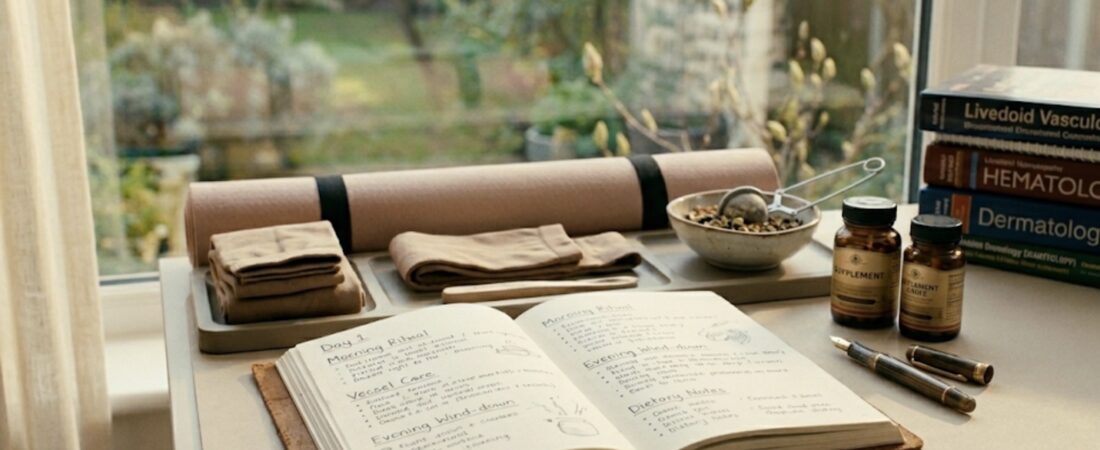
After surviving a 24-year battle with Livedoid Vasculopathy, I realized that relying solely on hospital treatments was not enough. To stop the brutal cycle of skin necrosis, I had to completely re-engineer my daily life. Because this rare disease is directly linked to blood circulation and the immune system, even the smallest daily habit can either trigger a terrible ulcer or keep your skin safe.
Here are the non-negotiable lifestyle habits that kept me alive, protecting my fragile blood vessels and preventing the dark purple lesions from breaking open.
## 1. The Sleep Protocol: Rebuilding the Immune System Before Midnight
For vascular disease patients, sleep is not a luxury; it is the ultimate medicine. The body heals and repairs damaged endothelial cells while we rest.
* **The Golden Rule of Sleep:** I made it an absolute, unbreakable rule to go to bed before 10:00 PM or 11:00 PM. I never allowed myself to stay awake past midnight.
* **8 Hours of Recovery:** I strictly secured a full 8 hours of sleep every single night. To protect the quality of my sleep, I completely eliminated both caffeine and alcohol from my life.
* **Morning Awakening Ritual:** When I woke up, I never rushed out of bed. Abrupt movements can strain compromised blood vessels. Instead, I lay in bed for a few minutes doing light, full-body stretching to gently stimulate blood flow from my core to my extremities.
## 2. Preventing Physical Stagnation: Hydration and Movement Control
When blood circulation slows down or pools in the lower extremities, pressure builds up, leading directly to tissue necrosis.
* **Hydration and Gut Health:** I drank fresh water constantly between meals. Preventing constipation is critical for colon cancer survivors and vascular patients alike; straining puts immense pressure on abdominal and lower-body blood vessels.
* **Anti-Stagnation Habits:** I never stood in one place for a long time. Even when sitting in a chair, I continuously rotated my ankles and flexed my feet. I avoided maintaining any single posture for hours. Long, exhausting walks were strictly avoided to prevent physical fatigue in my calves.
* **Loose and Natural Clothing:** I threw away tight clothes. I only wore loose, flowing garments to reduce physical tension. Undergarments were strictly selected from comfortable, organic materials.
* **Ditching the Heels:** High heels or any footwear that strains the legs were permanently banned. I only wore highly cushioned, ultra-comfortable sneakers.
## 3. The Evening Massage: Whispering Love to Dying Cells
Every single evening, I dedicated time to look at, touch, and care for my battered legs. This was both a physical treatment and a mental healing session.
Using a gentle, medical-grade lotion prescribed by my dermatologist, I massaged my legs with both hands, drawing soft, circular motions. I applied gentle, rhythmic pressure moving from the top of the foot upward toward the ankle to prevent interstitial fluid from pooling.
I paid special attention to the area around the Achilles tendon and the heels, squeezing deeply and sweeping upward to stimulate stagnant circulation. As I massaged my legs, I literally focused my mind and whispered to them: *”My dear cells, please become healthy and strong. I love you.”* Sending this pure energy of love and attention to my body became a vital nightly ritual.
## 4. Seasonal Thermal Defense: The Battle Against Ambient Temperature
Vascular ulcers react violently to changes in weather.
* **The Threat of Heat:** While winter is tough, summer is far more dangerous. When the weather gets hot, blood vessels dilate, and fluid pools, causing the skin necrosis to progress much faster and deeper.
* **My Wardrobe Strategy:** In the winter, I always wore thick thermal undergarments or fleece-lined pants to keep my legs warm. In the summer, I strictly wore loose trousers made of 100% natural linen or hemp to ensure maximum ventilation. I highly recommend sticking to natural fibers to minimize skin irritation.
## 5. The Waterproof Dressing Strategy: My Desperate Shower Routine
When you have open, necrotic ulcers on your legs, exposing them to ordinary tap water can lead to a catastrophic bacterial infection. Preventing contamination is a matter of survival.
* **The Food-Wrap Method:** Before entering the shower, I carefully dressed the necrosis with sterile gauze. Then, I wrapped my entire calf and foot tightly with plastic kitchen food wrap. I sealed the edges securely with medical waterproof tape to create a perfect shield against water. It made every single shower incredibly exhausting, but it was mandatory.
* **Emergency Disinfection:** If water accidentally leaked into the wound, I immediately sprayed it with a specialized antiseptic spray, left it open to dry completely, and then carefully sealed it again using a hydrogel dressing or fresh sterile gauze. You must protect the open wound from bacteria at all costs.
* **The Fatal Zone (The Instep):** Pay absolute, obsessive attention to the top of your foot (the instep). Unlike the calves or ankles, the skin on the top of the foot is incredibly thin. Once necrosis opens here, flesh does not grow back easily, and recovery is agonizingly slow.
## 6. Protecting the Mind: Guarding Against Emotional Turbulences
Emotional stress causes immediate, physical vasoconstriction (the tightening of blood vessels). I noticed that whenever I became excited, angry, or stressed, my legs would instantly begin to throb with pain.
I realized I had to aggressively protect my peace of mind. To keep my nervous system calm, whenever I was resting or doing nothing, I constantly played peaceful classical piano or cello music in the background. Filling my living space with calm, gentle melodies kept my heart rate stable and allowed my blood vessels to remain relaxed throughout the day.
In my upcoming posts, now that you know how I managed my daily routine, I will finally take you inside my kitchen to reveal **the exact healing Korean recipes and meal plans (Healing Diet)** that regenerated my blood vessels and colon. Stay tuned.